
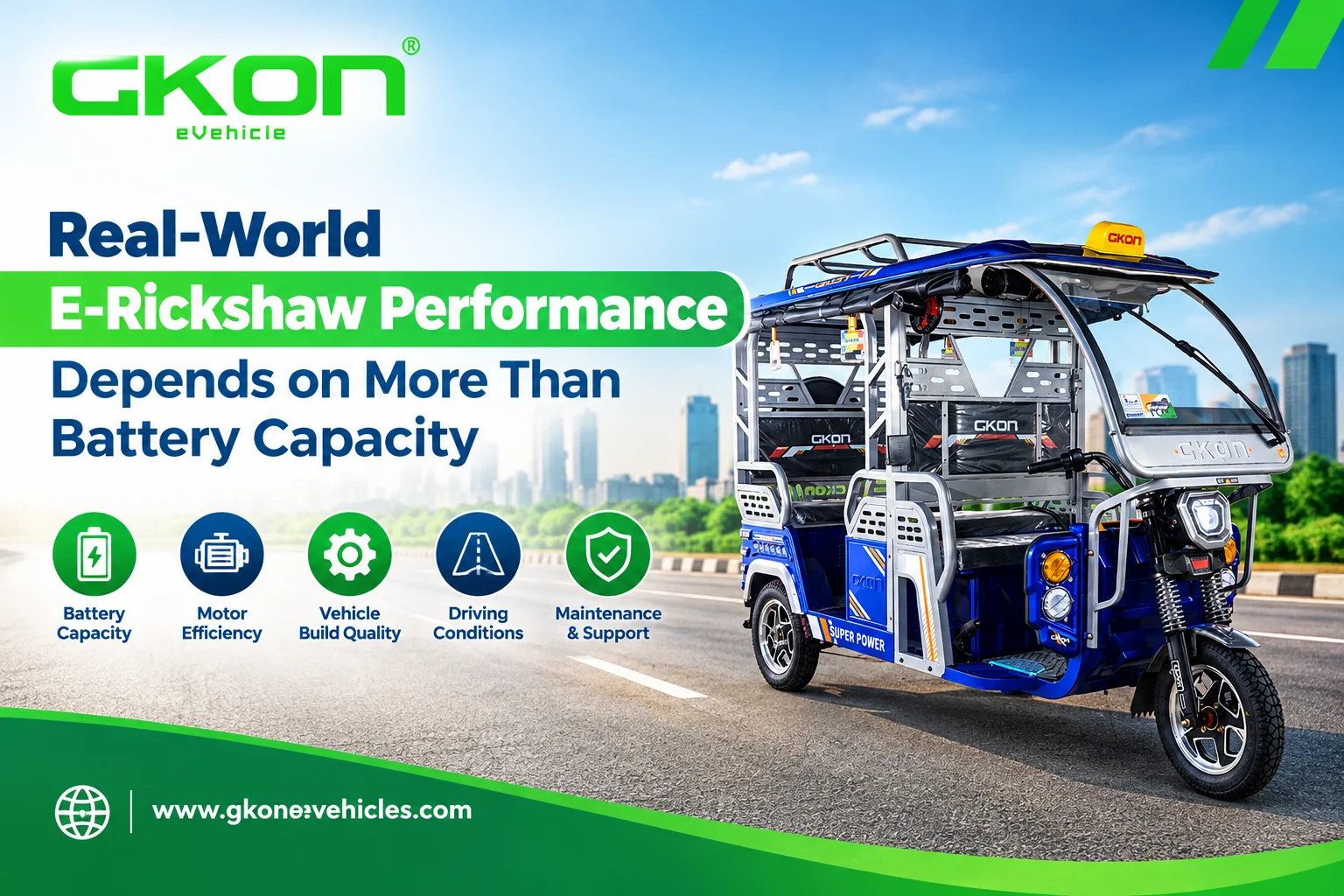
Battery capacity is often one of the first specifications buyers notice when evaluating an electric rickshaw. A larger battery may suggest longer running, but it does not automatically mean better performance on the road. For proper functioning of E-Rickshaw, every component matters, including motor, controller, battery, tyres and other electrical components integrated in it. They all influence the everyday performance of electric rickshaws. It is one of the major reasons why trusted E Rickshaw manufacturers work on the quality of each of them.
E Rickshaws run using batteries and that is why its capacity matters. But buyers must look beyond its capacity when manufacturing these vehicles for regular passenger transportation. Real-world performance comes from how effectively these components work together. Let’s understand it through this blog.
Motor and Battery Need the Right Match
The motor determines how efficiently electrical energy is converted into movement, while the battery supplies the energy required for operation. If these components are not properly matched, a high-capacity battery may still fail to deliver the desired acceleration or efficiency. Motor selection should consider the vehicle’s intended load, road conditions and expected operating pattern. The right combination helps maintain responsive pickup without placing unnecessary stress on the electrical system.
Controller Influences Power Delivery
The controller acts as an important link between the battery and motor. It regulates how electrical power reaches the motor and directly affects acceleration, response and overall drivability. A battery can have substantial capacity, but an unsuitable controller may result in inconsistent acceleration, delayed throttle response or inefficient power utilization. E Rickshaw manufacturers therefore need to consider controller specifications as part of the complete powertrain rather than treating it as an isolated component.
Vehicle Weight Affects Efficiency
Every e-rickshaw has to move its own structure in addition to its passengers and other loads. A heavier vehicle requires more energy to accelerate and maintain movement, particularly when operating frequently in stop-and-go traffic. This makes structural design an important part of performance. That is why, manufacturers need to balance durability with practical weight management so that the vehicle remains capable of handling everyday usage without unnecessarily increasing energy demand.
Tyres and Road Conditions Matter
Battery performance cannot be separated from what happens between the vehicle and the road. Incorrect tyre pressure, unsuitable tyres or poor road surfaces can increase rolling resistance and affect energy consumption. Traffic density, gradients, passenger load and frequent braking and acceleration can also change the distance an e-rickshaw covers on a single charge. Therefore, actual range should always be understood in relation to operating conditions rather than battery capacity alone.
Electrical Quality Supports Consistent Performance
Wiring, connectors, fuses and other electrical components may not receive as much attention as the battery, but they are essential to reliable operation. Loose connections, inadequate wiring or poorly selected components can cause power interruptions and reduced efficiency. Manufacturers that maintain proper electrical integration and quality checks can minimize these avoidable issues and support more consistent vehicle operation.
Conclusion
Through this blog, we now know that E-Rickshaw performance cannot be judged along by battery capacity. Motor compatibility, controller calibration, vehicle weight, tyres, road conditions and electrical quality all contribute towards acceleration, efficiency, range and reliability. But only reliable E Rickshaw manufacturers like GKON ELECTRIC MOTOR VEHICLES PVT. LTD., pay attention to the interaction between the powertrain, electrical system and vehicle design. And buying from these manufacturers helps ensure that these factors are considered together, resulting in a more balanced and high-performing e-rickshaw for everyday operation.
FAQs – Frequently Asked Questions
No, battery capacity is only one factor, and motor efficiency, controller performance, vehicle weight, tyres and operating conditions also influence performance.
The motor influences acceleration, torque, efficiency and the vehicle’s ability to handle different loads and road conditions.
The controller regulates power between the battery and motor, influencing throttle response, acceleration and power delivery.
Yes, a heavier vehicle generally requires more energy to accelerate and maintain movement, which can influence energy consumption.